World Food Culture: Welcome to the World of Turkish Tea
A New Form of Cultural Connection through Tea
In Japan, the popularity of black tea has been quietly spreading in recent years. While convenient styles such as tea bags and bottled teas have become part of daily life, domestically produced “Japanese black tea” and premium teas known for their distinctive aroma and origin are also drawing growing attention. Tea has evolved beyond a simple beverage into a cultural experience. Workshops led by tea instructors are flourishing, creating opportunities for people to share lifestyles and explore different cultures through tea. Amid this movement, a new fascination has emerged—Turkish Tea.Turkish Tea as a Cultural Heritage
Türkiye is one of the world’s leading tea-producing countries. Its heart lies in Rize, a province on the Black Sea coast, which marks the 100th anniversary of its tea industry. In 2022, “The Culture of Turkish Tea: Identity, Hospitality, and Symbol of Social Interaction” was inscribed on the UNESCO Intangible Cultural Heritage list, recognizing its global significance.
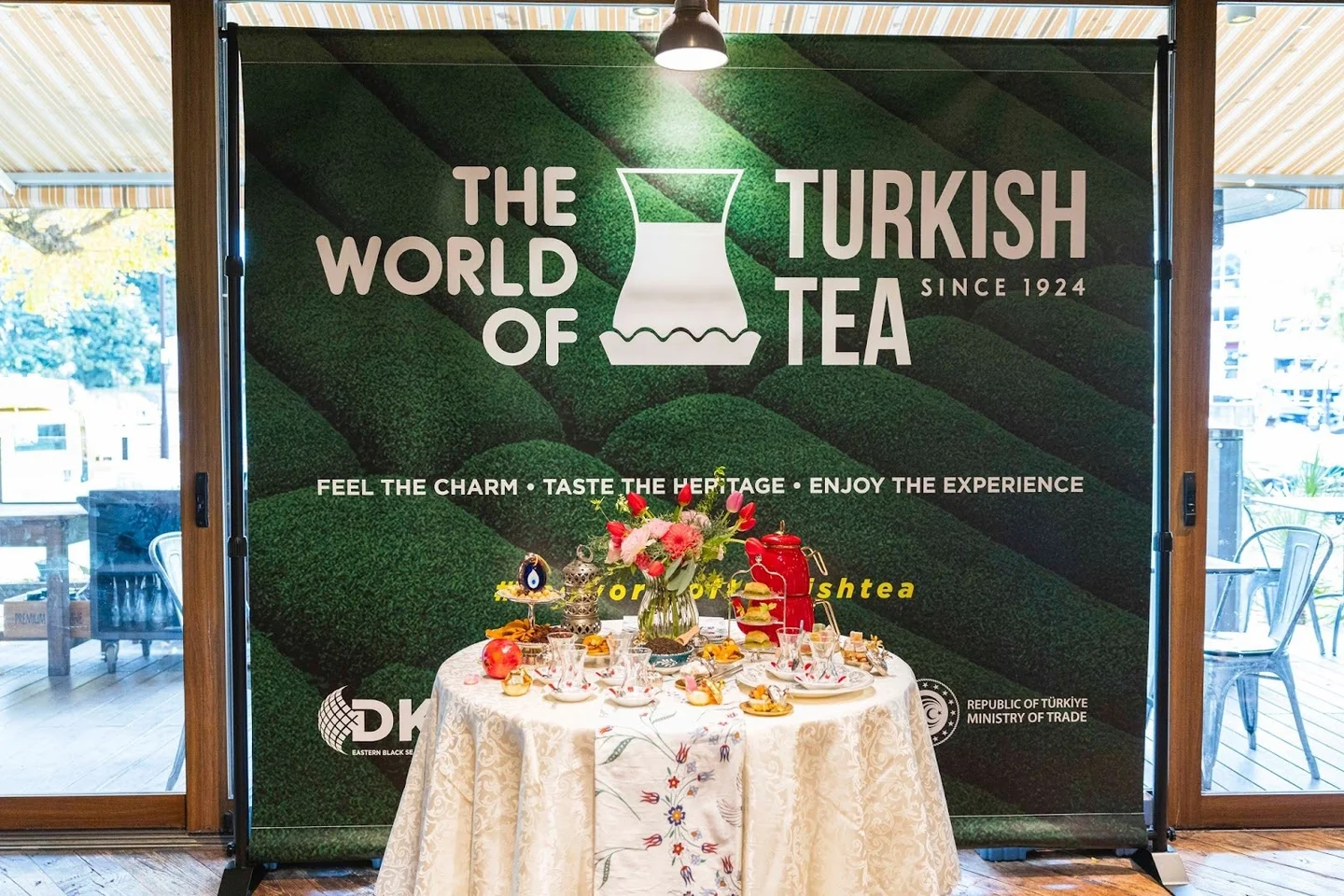
In December 2024, the Eastern Black Sea Exporters Association (DKİB) held a promotional event in Japan titled “The World of Turkish Tea: Feel the Charm, Taste the Tradition, Enjoy the Experience.” Celebrating both the 100th anniversary of diplomatic relations between Japan and Türkiye and the centennial of Türkiye’s tea industry, the event featured seminars by tea masters and tea competitions, offering Japanese participants an intimate look at the philosophy and fragrance of Turkish tea.
Amber-colored tea served in traditional tulip-shaped glasses, paired with sweet treats such as baklava, created moments where two cultures gracefully intertwined.
Learning and Friendship in Rize: A Journey through Tea
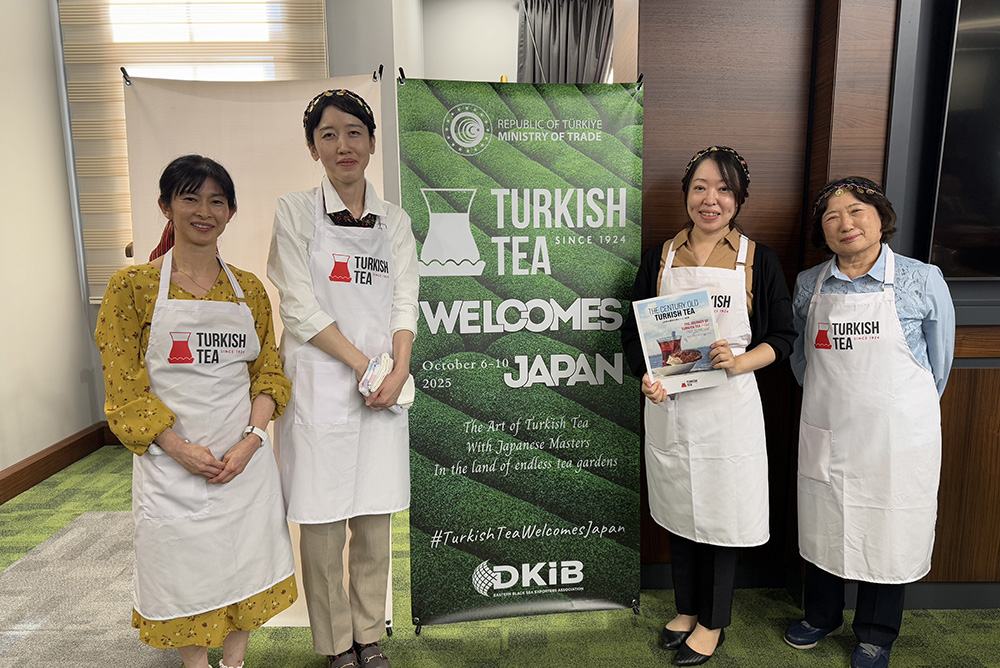
The event fostered a deeper appreciation of Turkish tea among Japanese tea professionals, leading to the “Turkish Tea Study Tour 2025,” held from October 5 to 14, 2025, a milestone in cultural exchange.
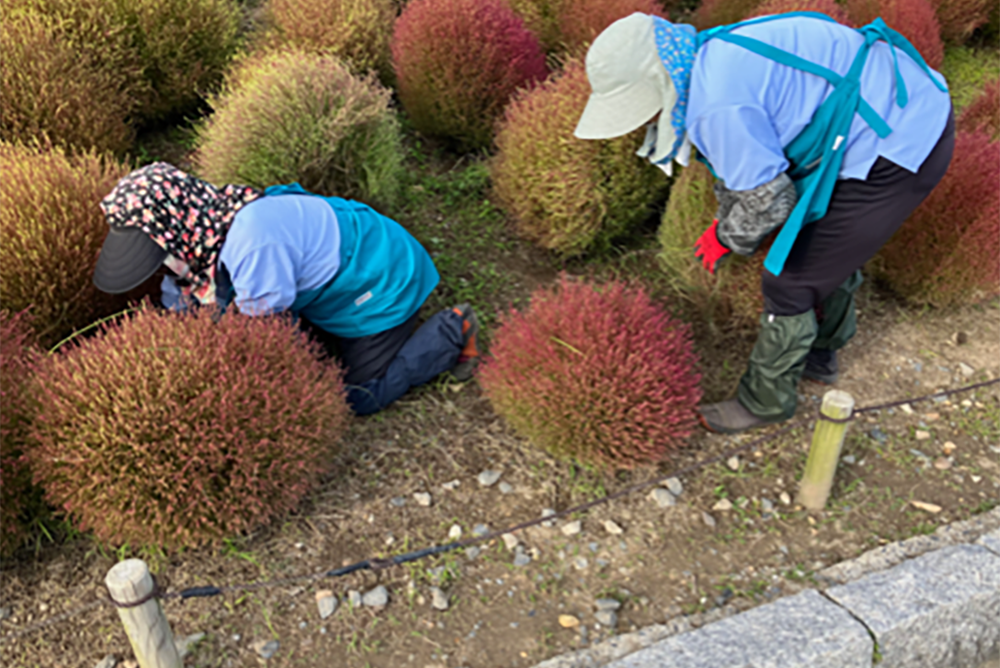
Supported by the Eastern Black Sea Exporters Association (DKİB), thirteen Japanese tea instructors visited Rize, the sacred land of Turkish tea. Over ten days, they immersed themselves in the essence of tea culture, touring tea plantations, observing hand-rolling demonstrations, and attending seminars by local tea masters.
A highlight of the program was a tea brewing and presentation competition, in which Ms. Kanami Koshi won first place and was honored by the local governor. The achievement was even featured on local television.
Participants were also welcomed into the homes of Turkish tea masters, sharing home-cooked meals and warm hospitality that transcended language and nationality. After their studies in Rize, the group traveled to Istanbul, visiting landmarks such as Hagia Sophia, the Blue Mosque, and the Egyptian Bazaar. Surrounded by the aroma of tea, their journey became one of lasting friendship and cultural discovery.
As Japan’s tea culture continues to mature, the aroma and warmth of Turkish tea open a new door to a richer, more connected tea life.