Beyond the Exhibition: A Practical Model for Entering the Japanese Market
A Review of FOODEX JAPAN 2026
The editorial team of “delicious Japan”, in addition to its media activities, has been involved in numerous international exhibitions and market entry support projects since its inception in 2006. Drawing on this experience, this article examines a practical case of market entry into Japan, using FOODEX JAPAN, Asia’s leading food and beverage exhibition, as a starting point.
Since its launch in 1976, FOODEX JAPAN has grown into a major international business platform, bringing together food manufacturers, trading companies, and buyers from around the world. In 2026, the exhibition hosted approximately 3,000 exhibitors from 76 countries and regions and drew more than 72,000 visitors, reinforcing its position as a key gateway to the Japanese market.
However, breaking into the Japanese market is challenging. Quality, consistency, and trust are crucial. In such a setting, one-time promotions or just participating in exhibitions usually don't produce real results.
Against this backdrop, one country has been steadily overcoming these barriers: Türkiye. At FOODEX JAPAN 2026, the Turkish Pavilion, featuring 45 participating companies, went beyond conventional exhibition practices and demonstrated a clearly defined strategic model for entering the Japanese market.
Designing Exhibitions as Part of a Process

For many countries and companies, participating in an exhibition often becomes an end in itself. The Turkish approach, however, is fundamentally different.
At FOODEX JAPAN, a dedicated B2B area was established within the pavilion, where meetings with carefully invited Japanese buyers were systematically arranged. This was not a space for passive visitor engagement, but one where interactions were intentionally designed to determine who to meet, what to present, and how to communicate. In this model, the exhibition is not positioned as a final outcome, but as one component within a broader process. Such a design can only be realized through a strategic approach grounded in a deep understanding of the local market and hands-on operational experience.
Building Relationships Before and After the Exhibition
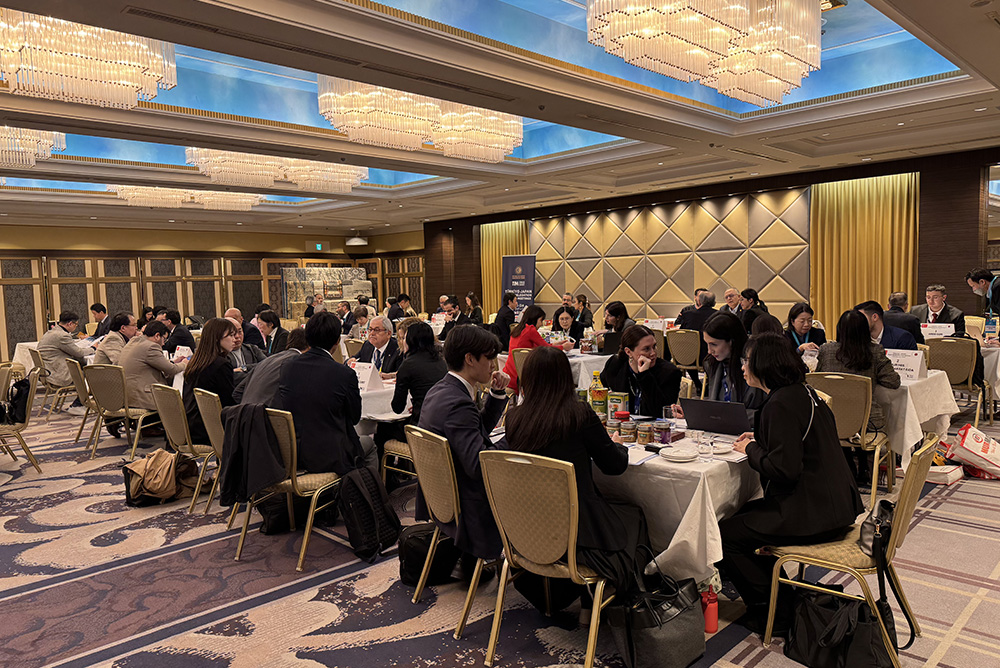
Equally important are the activities conducted beyond the exhibition itself. In November and December 2025, and again in February 2026, Turkish food companies visited Japan by category, organizing seminars, B2B meetings, and networking events at hotel venues. These were not isolated initiatives, but part of a continuous effort to build trust through repeated engagement.
This approach is structured around three layers:
Creating Understanding Through Experience: The Role of the Trend Stage
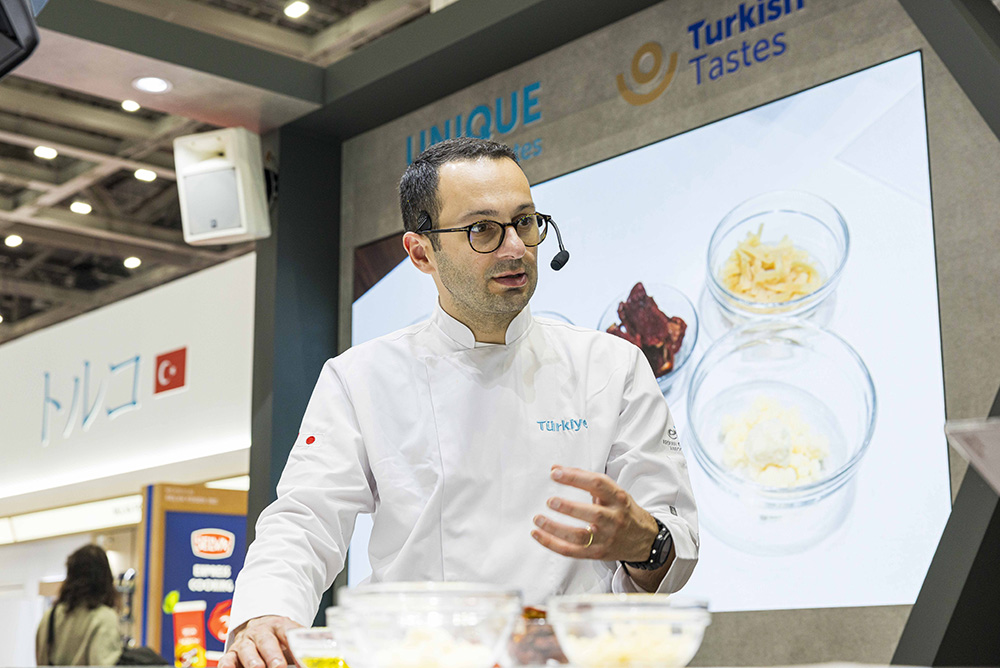
Within the FOODEX venue, a special area known as the Trend Stage was utilized to host live cooking demonstrations and tasting sessions by Michelin-level chefs invited from Türkiye, held over four days.
What was presented here was not merely food. It was the application of ingredients and the vision of finished dishes, which are among the most critical elements for Japanese buyers.
In Japan, high-quality ingredients alone are not sufficient to secure adoption. Buyers need to understand how those ingredients can be used in practice. Only then does serious consideration begin.
This is not simply a promotional activity. It is a carefully designed approach to advance decision-making. Türkiye has clearly understood and implemented this principle.
Why This Model Works - A Replicable Framework for Entering Japan
What emerges from this case is not merely a success story, but a practical model for entering the Japanese market.
This model is built on three core structures:
1. Shifting from exhibition to experience
2. Presenting not just products, but how they are used
3. Shifting from exposure to engagement
Building relationships through continuous interaction, rather than one-time contact
Shifting from one-off participation to continuity
Establishing a year-round presence and accumulating market touchpoints
It is the integration of these three elements that ultimately leads to meaningful results in Japan.
Not a Türkiye-Specific Case
This model is not unique to Türkiye. It is, in fact, a framework that can be applied by any country or organization seeking to enter the Japanese market.
If exhibition participation remains a one-time activity
If relationships with buyers do not continue beyond initial contact
Then the issue may not lie in the market itself, but in the design of the approach.
Editor’s Note

The Japanese market is challenging. Yet with the right design, it is also a market that can be successfully accessed. What Türkiye has demonstrated is not simply a successful example, but a practical roadmap that visualizes the process leading to results. Today, the ability to design and execute the entire process, from exhibition participation and business matching to relationship building and market penetration, has become a decisive factor in achieving success. In Japan, participation alone does not create outcomes. Only those who design the pathway can build relationships and achieve results.
Such initiatives do not function as isolated measures. They become effective only when exhibitions, business meetings, relationship development, and market expansion are designed as one integrated process. In recent years, there has been a growing movement toward supporting market entry and establishment in Japan through collaboration with government agencies and industry organizations, based on a comprehensive understanding of this process.
For those facing challenges in entering or expanding within the Japanese market, it may be time to reconsider not only the actions taken, but the design behind them. The importance of partners who can combine strategic planning with on-the-ground execution, based on a deep understanding of the Japanese market, will continue to grow in the years ahead.