Food, Sake and Onsen: A Deeper Journey into Japan
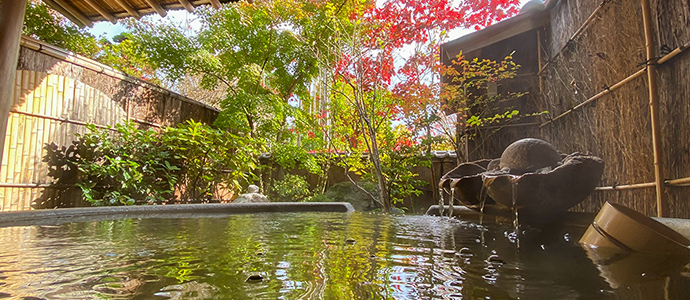
Beyond the rising steam of a hot spring lies a way of life. A soak in mineral-rich waters, a meal shaped by the season, a glass of local sake—together, these pleasures offer an intimate encounter with a place and its people. In this autumn–winter issue of delicious Japan, we turn our attention to onsen and the cultural richness that makes a journey through Japan so rewarding.
A Culture Rooted in Place
Washoku, Japan’s traditional dietary culture, was inscribed on UNESCO’s Intangible Cultural Heritage list in 2013, followed in 2024 by the traditional knowledge and skills of sake-making with koji mold. Japan is now seeking inscription of its onsen culture, with recognition in 2030 in mind.
Food, sake and onsen form a natural trilogy. Each reflects the water, climate and landscape of its region, as well as the knowledge passed down through generations. Experienced together, they offer visitors a deeper understanding of Japan—one that unfolds through the senses and through encounters with the people who sustain these traditions. Together, they offer a compelling reason to venture beyond familiar routes and experience Japan through its regional cultures.
The significance of onsen extends well beyond the properties of the water. It encompasses reverence for nature, the tradition of tōji—restorative stays centered on hot spring bathing—and the relationships built around shared baths and welcoming inns. To introduce onsen to the world is to tell these stories, too.
This issue explores the movement toward UNESCO recognition and takes readers to Kusatsu, Misasa, Shin-Tamagawa, Arima and Nagayu. Through their distinctive waters, local food and histories, we invite you to discover the extraordinary diversity within Japan’s bathing culture.
What Makes Tourism Truly Successful?
As Japan’s attractions reach a wider audience, an important question follows: how can tourism enrich the places that make it possible?
The Japanese government continues to target 60 million international visitors annually by 2030. Yet can rising arrivals alone be considered a measure of success? Concerns about overcrowding, pressure on transport and disruption to residents’ daily lives call for a broader understanding of what successful tourism should achieve.
Success also depends on whether communities can welcome visitors without compromising daily life, whether tourism supports those who sustain local traditions, and whether travelers have time to understand the places they visit.
Longer stays in onsen towns, with opportunities to explore local food, crafts, and everyday life, offer one promising direction. Quality tourism should leave both visitors and communities better off, while helping nature and culture endure. The quiet pleasures that draw travelers to Japan deserve care as well as celebration.
As a magazine introducing Japan to international readers, we also have a responsibility to look beyond familiar images and explain the people, histories, and ideas behind them. Our interview with Dan Sloan, president of the Foreign Correspondents’ Club of Japan, invites reflection on that responsibility. In an age of abundant information, listening closely, understanding context, and recognizing stories worth telling remain essential.
Elsewhere in this issue, Türkiye’s ambassador to Japan and Chef Mehmet Dikmen open windows onto Turkish food and hospitality. Daniele Cason, executive chef at Mandarin Oriental, Tokyo, shares his culinary perspective, while Philippe Sauzedde reflects on half a century connecting Japan and France. Alongside our regular Tokyo sightseeing and restaurant guides, their stories reveal how food brings cultures and people into conversation.
We hope these pages inspire you to linger, look more closely, and make discoveries of your own. Through delicious Japan, we will continue to share the places, people, and traditions that give Japan its depth—and the encounters that make travel meaningful.