Japan’s Stories Still Matter to the World
FCCJ President Dan Sloan on How Japan Communicates with the World
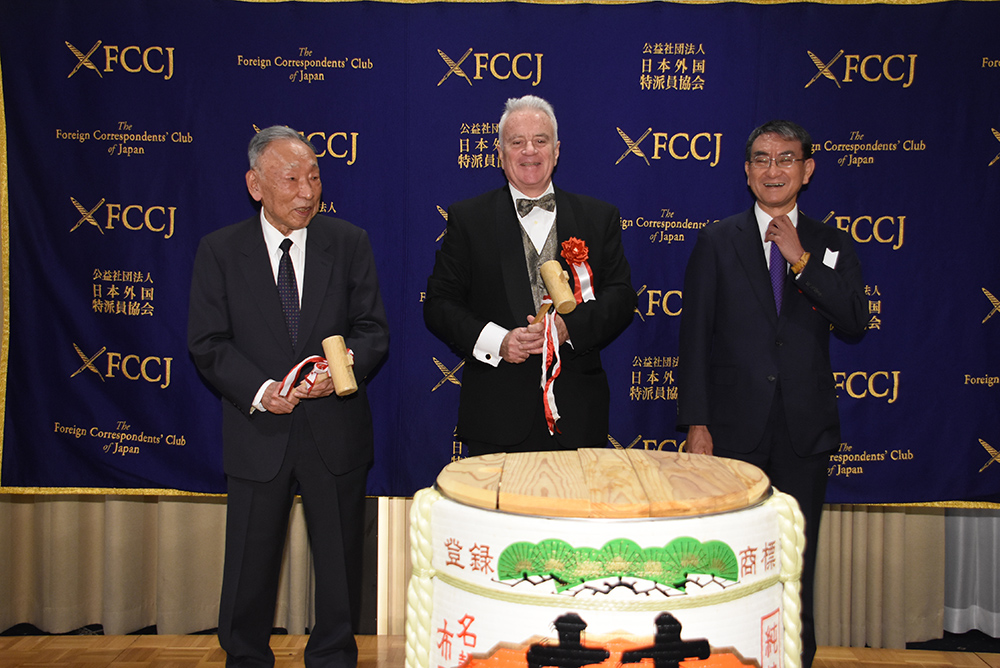 Photo by FCCJ
Japan may no longer command the international attention it did at the height of its economic power, but its food, culture and regions continue to generate strong interest around the world. Dan Sloan, President of the Foreign Correspondents’ Club of Japan, discusses what makes a story from Japan resonate internationally, why familiar concepts such as ‘omotenashi’ need clearer explanation, and how professional journalism can help Japan engage more effectively with global audiences.
 Photo by Andrew Malana
Dan Sloan
Dan Sloan is President of the Foreign Correspondents’ Club of Japan. A journalist and university professor, he has reported for Reuters in Japan and Singapore and appeared on CNN, BBC, CNBC and CCTV. He holds an M.S. in Journalism from Columbia University and is the author of Playing to Wiin: Nintendo and the Video Game Industry’s Greatest Comeback.
How has the world’s view of Japan changed since you joined the FCCJ in 1994?
In 1994, Japan was emerging from a period when it had been widely regarded as one of the world’s leading economic powers and was still the world’s second-largest economy. Japan’s stock market had reached a record high, and Japanese companies were known for acquiring major assets overseas. By the early 1990s, however, the bubble had burst. The country entered what became known as its “lost decade”; several major financial institutions failed, and the banking industry underwent extensive restructuring.
Japan continued to play an important financial and diplomatic role, but China’s economy expanded rapidly, and its prominence on the global news agenda grew dramatically. In 1994, Japan was still one of Asia's dominant stories. Today, it is one of several important Asian stories. We sometimes hear the expression “Japan passing”—the idea that the world is increasingly looking past Japan—and international media coverage has declined as attention has shifted elsewhere.
What makes a story about Japan resonate internationally?
A recent FCCJ event on Japanese tea offers a good example. Matcha is enjoying a global boom, driven in part by growing interest in health and wellness, but the discussion went beyond its popularity. Japan’s farmers are aging, less farmland is under cultivation, and the area devoted to tea cultivation is declining. The industry also faces growing competition from overseas producers, as well as imitations marketed as Japanese tea.
The story therefore raises broader questions. Can Japan sustain its tea industry? Who will grow tea in the future? How will demographic change affect regional communities and traditional industries? An internationally recognizable subject becomes a more compelling story when it connects to deeper economic, demographic, and social issues.
Japanese people may also underestimate how strongly their culture resonates abroad. Kabuki, the Kodo drummers of Sado Island, and sumo are all deeply rooted in Japanese culture, yet they have developed enthusiastic international followings. What may seem too specifically Japanese can be precisely what interests people overseas.
Why does Japan sometimes struggle to communicate its value?
Japan has much value to offer, but it does not always explain its ideas and contributions succinctly or persuasively enough. Communication cannot be limited to delivering a promotional message. It requires dialogue, clear explanation, and a willingness to answer difficult questions.
Japan continues to be respected for quality. “Made in Japan” carries considerable value, and many consumers regard it as a mark they can trust. ‘Omotenashi’, however, may sometimes be overused, and not every positive experience in Japan needs to be described in those terms. A Japanese business hotel may not offer luxury or highly personalized service, but it often provides cleanliness, functionality, safety, and good value for money. These are important strengths in their own right. Japan should explain these qualities specifically, rather than describing every positive feature simply as ‘omotenashi’.
How have tourism and social media changed the way people discover Japan?
The weaker yen has helped Japan attract record numbers of international visitors. A country once considered extraordinarily expensive has become relatively affordable. Visitors now share photos and videos of their experiences on social media, allowing individual discoveries to reach audiences around the world. They show others what they enjoyed about Japan and inspire more people to visit. This has contributed significantly to the rapid growth of inbound tourism.
This growth is fundamentally positive, but it has also raised concerns about overtourism. Japan now needs to manage tourism more effectively while encouraging visitors to explore destinations such as Toyama, Tottori, and Hokkaido. The FCCJ can play a role in this effort. We have hosted events featuring regions including Kinki and Nagasaki, giving local communities an opportunity to share their stories directly with the international media.
What role should professional journalism and the FCCJ play today?
The FCCJ has a history spanning more than 80 years. We were once rather traditional in how we promoted ourselves and used technology, but that has changed. Today, our events are livestreamed on YouTube, shared through social media, and archived online. Even those who cannot visit Japan can turn to the FCCJ for a deeper understanding of the country.
At the same time, the Club offers more than the rapid dissemination of information. It provides a professional forum where speakers present their views, journalists ask probing questions, and important issues become part of the public record. The FCCJ is not simply a public-relations platform. Journalists are there to ask difficult questions.
We are also expanding beyond traditional press conferences. Programs on subjects such as tea, regional tourism, and culture can introduce different aspects of Japan to international audiences while preserving opportunities for independent questioning. We describe the FCCJ as “where news is made,” and that will always remain at the heart of our mission. But the Club can also serve as a place where Japan and the world meet—and where the country’s food, culture, regions and people are explored with professional curiosity.
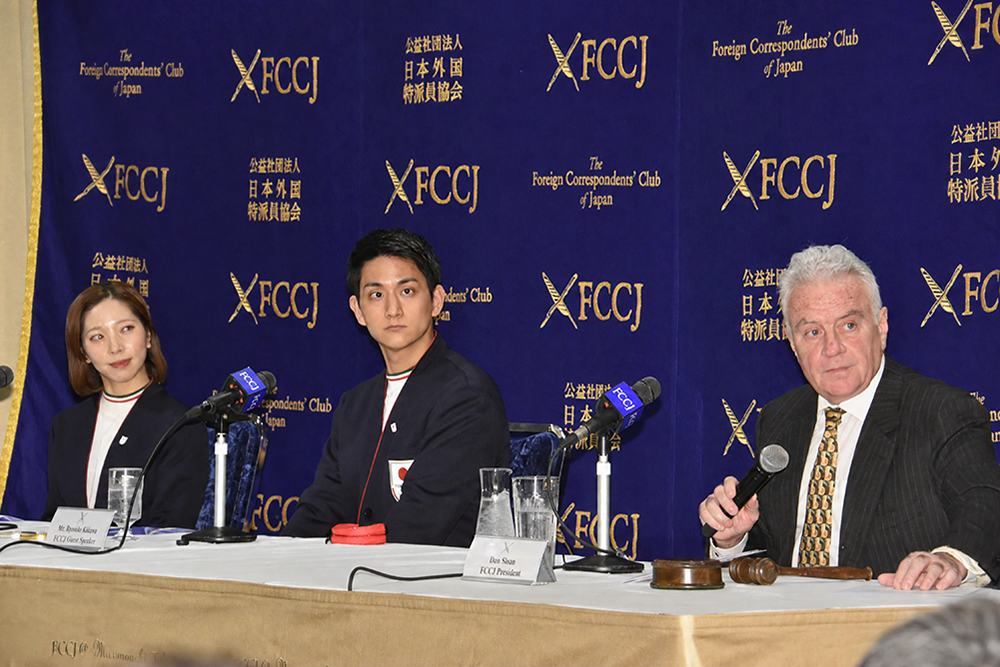 Photo by FCCJ