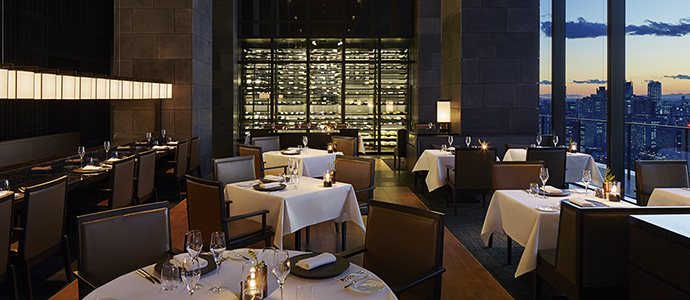
Aman Tokyo
Cooking as a Living Dialogue with Nature, Seasons, and People
Rooted in respect for nature and the seasons, Chef Sekine transforms each fleeting moment into a harmonious expression of flavor, artistry, and heart.
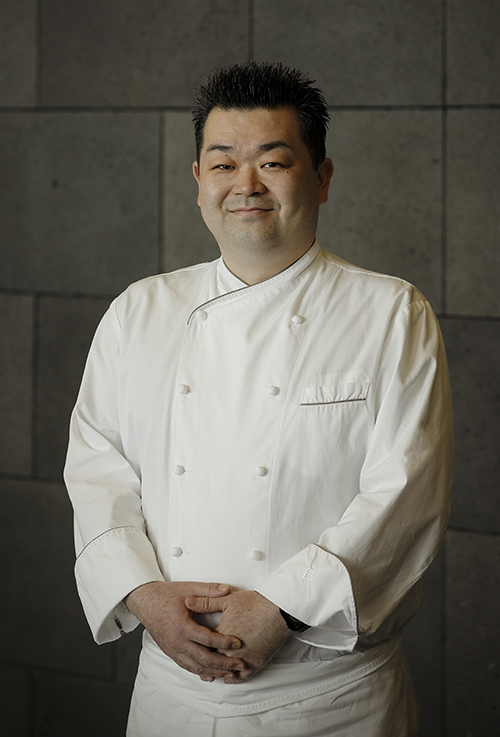 Takahiro Sekine
Culinary Director, Aman Tokyo
Since childhood, I have always dreamed of becoming a chef. I even wrote “cook” as my future dream in kindergarten. Growing up in a modest household, I often had to prepare food for myself, and that necessity sparked my creativity in cooking. During my teenage years, I began cooking for my family and the people around me. The joy of creating something and the happiness it brought to others convinced me that this was the path I was meant to follow. My father also worked in the food industry before I was born, so I believe his influence played a part as well.
Rather than having a single “master,” I have learned from everyone I’ve met, regardless of age or background. I try to adopt whatever technique or idea is admirable in others. In that sense, my philosophy is “Everyone other than myself is a teacher.”
At the heart of my philosophy lies a deep respect for nature and the seasons. Cooking, to me, is an ephemeral art, an experience that captures a moment, a place, and an emotion. Even if the same dish is recreated, it will never be precisely the same.
I do not prioritize one element over another; harmony and balance among all senses are paramount. My goal is that guests feel complete satisfaction not after a single dish, but upon finishing the entire course.
I value direct relationships and transparency, knowing the face behind each ingredient. I visit various production sites at least once a month—fruit farms, mushroom growers, and dairy artisans—to understand their environment, management, and philosophy. I actively use ingredients that come with a story and authenticity I can believe in.
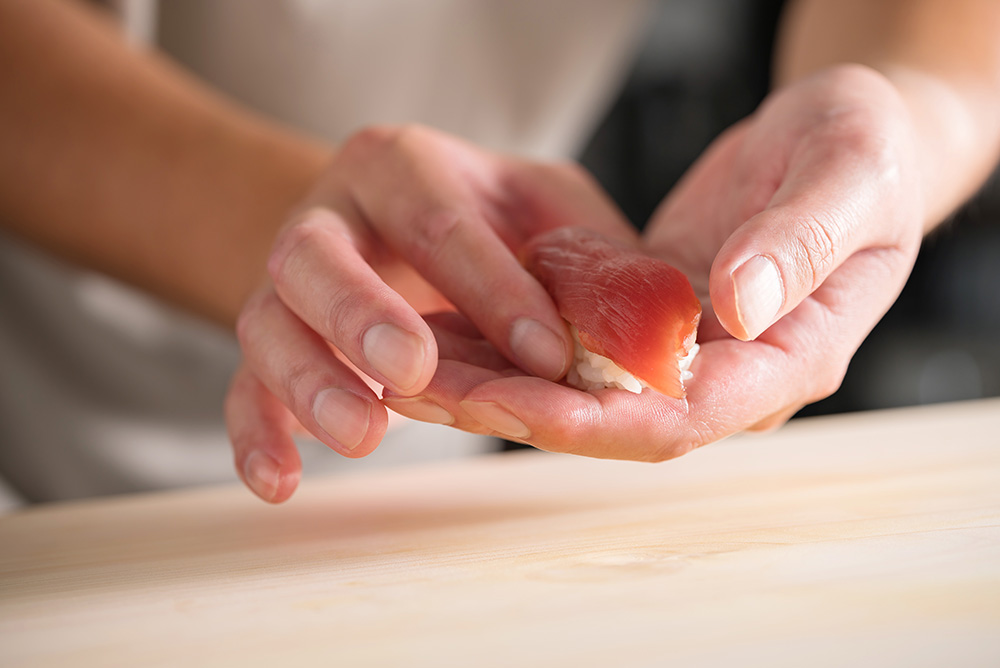
For seafood, we collaborate closely with sushi masters who visit Toyosu Market daily to handpick the freshest catches. Within the hotel, we also work across departments with specialists in each culinary field to ensure the highest quality.
I’m always thinking about new ideas almost every day. Aman Tokyo features multiple outlets, including the Italian restaurant Arva, the Edomae-style sushi restaurant Musashi by Aman, and the all-day dining lounge offering Chinese cuisine and other menus. I constantly exchange ideas and conduct trials with our talented chefs. While menus are updated seasonally—spring, summer, autumn, and winter—they are also refined continuously.
My inspiration comes most often from conversations with people. By imagining someone’s mood or preferences, ideas naturally emerge: “What kind of dish would bring joy to this person?” Encounters with nature and visits to producers also stimulate creativity. I first build the dish in my mind, test it against my flavor memory, and only then bring it to life. In truth, only about ten percent of my ideas make it to the plate.
Over 90% of Aman Tokyo’s guests come from overseas. While respecting their preferences, I ensure they experience a genuine sense of Japan—its ingredients, seasonings, and the subtle rhythm of the four seasons. That is the essence of “Tokyo’s Japan.”
I always strive to serve what guests truly wish to eat at that moment, even if it’s not on the menu. When I returned to Tokyo after serving as Hotel Manager at Amanemu, several long-time guests recognized me in the lobby and said, “We’d love to have Chef Sekine’s dishes tonight.” Using only what was available that day, I cooked for them on the spot. When they told me it was “the best meal,” it became an unforgettable memory.
For guests feeling unwell, I avoid raw foods and suggest something light and restorative. Through conversation, I find the most suitable dish for each situation. Instead of sticking to fixed recipes or measurements, adjust each component to its best possible state that day. Even a dish with the same name may differ subtly to achieve its “perfect balance of the moment.”
I believe Aman still holds significant potential for further development in Japan, and Tokyo will continue to play a leading role in that expansion. I want to remain receptive and proactive, always ready to take on new challenges.
In nurturing young chefs, I emphasize the importance of allowing them to challenge and to learn from mistakes. Recently, we have focused on strengthening the “guest perspective.” For example, young chefs prepare three dishes after hours, let them rest for three minutes to simulate actual serving conditions, and then we all taste and discuss them together. Conducting these sessions weekly or every ten days helps them grasp the reality of timing and service, fostering both skill and confidence.
My role extends beyond cooking itself. While I work hands-on in the kitchen, I also see myself as an “editor and director” who draws out the individuality of each team member.
The Japanese word omotenashi can be interpreted as “without façade.” It doesn’t simply mean sincerity without pretense—it’s the act that arises naturally from one’s inner self. True omotenashi is when one’s thoughts and actions align seamlessly, guided by empathy for another’s background and emotions.
It is neither surface nor hidden. It comes from the heart itself. That, to me, is the essence of genuine hospitality.
A Concierge on the Move
Guided by curiosity and sincerity, Takeuchi moves through Tokyo as a “concierge on the move,” transforming simple encounters into moments of genuine hospitality.
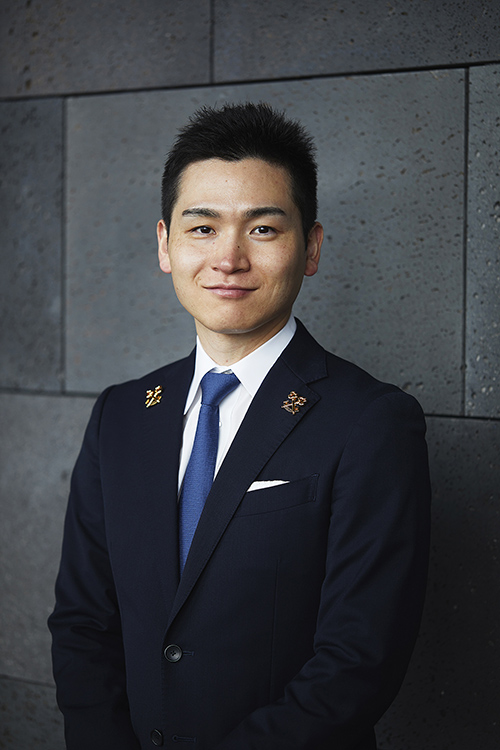 Shuta Takeuchi
Chief Concierge, Aman Tokyo
Member of Les Clefs d’Or
I spent my high school years studying in Canada, not to learn English or hospitality, but purely to pursue ice hockey. However, a series of injuries forced me to give up the sport, and after graduation, I began working at a restaurant. That experience was my first encounter with the world of service, and it became the foundation of my sense of hospitality.
After returning to Japan, I joined a traditional ryokan, and in 2015, I participated in the Les Clefs d’Or Asia Congress held in Tokyo. That event changed my life. I learned for the first time about the profession of a concierge, and it struck a deep chord within me. From that moment, I knew this was my path. In 2018, I moved to Tokyo to begin my career as a concierge at The Prince Gallery Tokyo Kioicho, followed by a position at Conrad Tokyo. Since December 2023, I have been part of Aman Tokyo.
For me, being a concierge is not an end in itself; it is a means. The ultimate goal is always the guest’s happiness. Our role is to be a bridge connecting people and places, turning a stay into a meaningful memory. In essence, a concierge is a supporter who gives form to joy, which is the heart of our profession.
What does a typical day look like for you?Each morning begins with checking every email and structuring the day’s flow. Then I move to the desk and begin guest interactions, responding to inquiries in person, by phone, and through agents. My work revolves entirely around people.
I also spend much time outside the hotel, visiting partner venues and greeting them personally, especially when hosting VIP guests. I consider myself a “concierge on the move.” Rather than staying behind the scenes, I prefer to be out in the field, building relationships directly.
I value both warmth and composure—what I call “On” and “Rei.” “Warmth” means genuine kindness: meeting the guest’s eyes, calling them by name, and conveying comfort through expression and tone. “Composure” means calmness, not coldness: maintaining grace under pressure. Like a swan gliding serenely on the surface while paddling tirelessly below, a concierge should remain elegant no matter what happens.
What was the most challenging request you’ve handled?One unforgettable experience was when a guest from Dubai asked me to secure tickets to the final day of a Grand Sumo Tournament, with only two days’ notice. Those tickets are nearly impossible to obtain. Yet, with the entire team’s effort and the support of our connections, we managed to acquire them. It was a moment that reminded me of the power of teamwork and relationships.
Have you had any particularly touching encounters?Once, a guest asked me to find an art gallery in Ginza that he had visited 25 years earlier. We retraced his memories together and finally found the place. When he exclaimed, “This is it!” his joy was overwhelming. Since then, he has become a loyal guest. A single “search” can become a lifelong connection; that is the beauty of this profession.
How do you continue to learn and grow?Tokyo evolves at incredible speed, and staying current is essential. Both information and values change daily. For instance, while restaurant reservations used to be handled mainly by phone, more than 70% are now online. We must embrace such efficient tools while never losing the human touch. Growth comes from evolving with the times, free from fixed ideas.
What defines the hospitality of Aman Tokyo?It offers experiences that exist nowhere else, uniquely “Tokyo.” Guests might observe a private morning practice at a sumo stable or join a sushi master at Toyosu Market to select fresh ingredients. We craft journeys that blend culture and space.
In service, we focus on perfect alignment with each guest’s rhythm. Some wish to linger in the lobby; others prefer to head straight to their room. Aman’s strength lies in adapting gracefully to both.
I want to create an environment where concierges can move more freely, reducing time spent behind screens and increasing time spent directly with guests. Ideally, I’d like to personally accompany a guest to a restaurant I booked for them and see them off at the entrance. Sharing moments on the way and feeding that insight back to the team would deepen what I call “emotional connection.”
What does omotenashi mean to you?Omotenashi is the art of “continuous natural awareness.” It’s like being offered a cool barley tea on a hot summer day, before you even ask for it.
Once, when a family with a one-year-old child requested a yakiniku restaurant, I first ensured stroller access and then found a place where staff would grill the meat for them. Such small acts of thoughtfulness accumulate into comfort. Consideration is a delicate matter—it reminded me that empathy must always be guided by true sensitivity.
To me, omotenashi means being genuinely interested in people. From that curiosity comes awareness and action, and I believe that is the essence of genuine hospitality.