Turkish Travel Journal: A Warm and Delicious Afternoon
On the occasion of her return from Turkiye, senior tea taster, Ms. Shizuyo Ohe, shared her visual and taste experiences at the Ginza showroom on May 29. This event was organized by Yumiko Egawa, Yoko Fukao, and Harumi Ito.
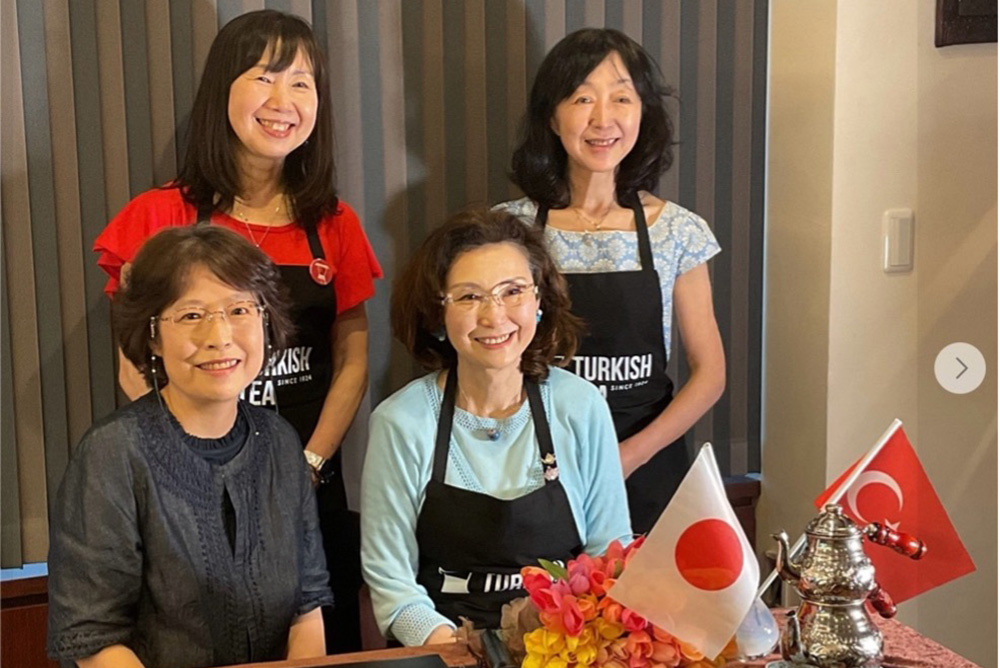 Top left: Yoko Fukao; Top right: Harumi Ito; Bottom left: Shizuyo Ohe; bottom right: Yumiko Egawa
As we entered, the space was warmly decorated with tulips, the national flower of Turkiye. Ms. Harumi Ito had beautifully arranged a selection of Turkish treats on our plates: baklava, Dubai-style chocolate cake, lokum, roasted chickpeas and hazelnuts, dried fruits, as well as date paste and crackers — a delicious way to begin our journey into Turkish cuisine!
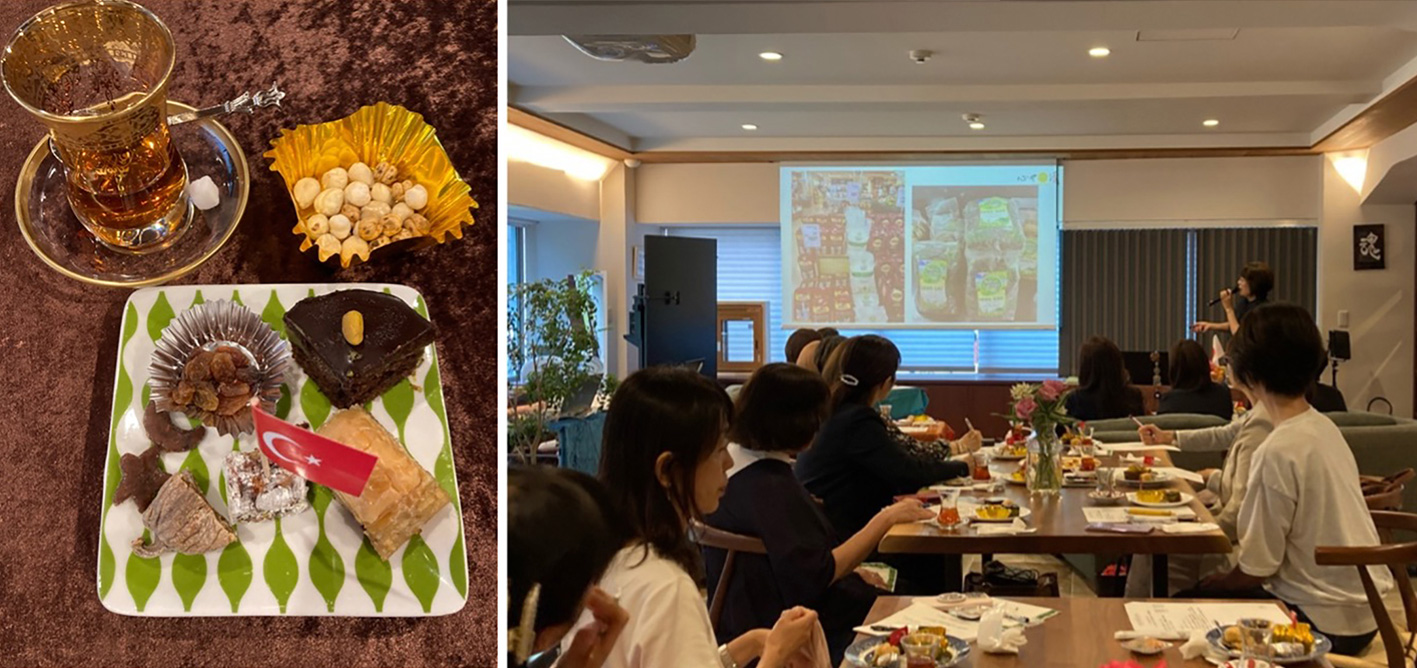
Tea expert and holder of the highest-level Chinese certifications in the art tea, Ms. Oe Shizuyo began with an introduction to Turkish black tea, known as “çay”. Today, it is the most commonly consumed type of tea in Turkiye. While its history is relatively recent, with roots going back to the Silk Road in the 16th century, it has now become deeply embedded in everyday life — it’s even considered the national drink. With 250,000 tons of dry tea produced annually, Turkiye ranks 5th in the world in terms of production volume. Around two-thirds of this tea comes from Rize, a region in the northeast of the country. On average, Turkish people drink 5 to 10 cups of tea per day — about six times more than in Japan! Ms. Oe Shizuyo’s photos brought this to life even more vividly: men enjoying tea outside in the streets, and women welcoming guests at home with homemade sweets.
Throughout the presentation, Ms. Harumi Ito served us different types of black tea, including Çay Çiçeği and Siyah Çay, as well as Mila Tea, a black tea flavored with bergamot. The teas were served in delicate tulip-shaped glasses that help retain heat — a traditional and elegant way to enjoy Turkish tea. Ms. Oe Shizuyo also introduced us to Elma Çay, a tea made from dried apples rehydrated in hot water, Nar Çay, a pomegranate tea, and other herbal infusions made from various plants, appreciated both for their taste and their health benefits.
Ms. Shizuyo Ohe then shared beautiful images of Turkiye — hot air balloons floating over Cappadocia, the natural wonder of Pamukkale, a UNESCO World Heritage site, lively streets stalls selling kebabs and ice cream, and traditional Turkish baths.
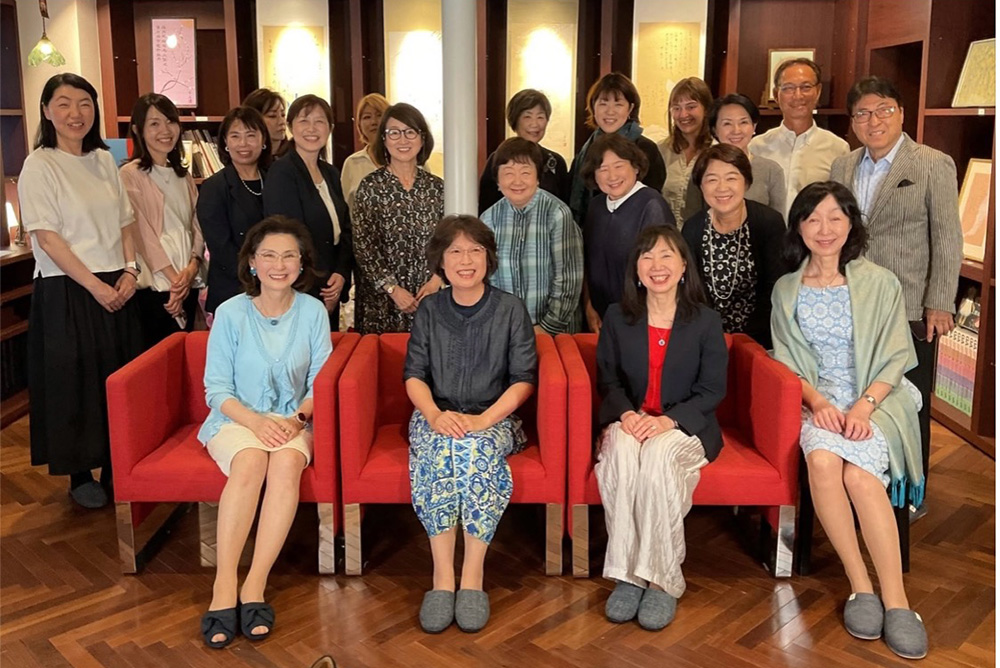
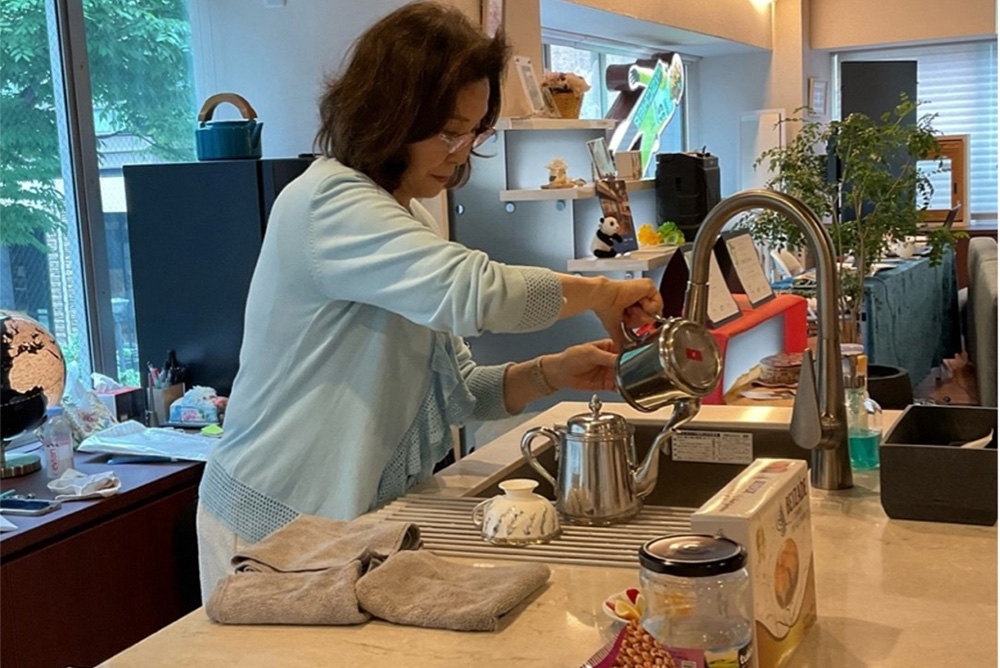
She ended her presentation by explaining different ways to prepare and enjoy Turkish tea, especially using the çaydanlık, the traditional two-tiered Turkish teapot. After a group photo and some final conversations, this wonderful journey through Turkiye came to an end — and everyone left with a smile.