Discovering Europe Beyond the Glass: Exploring the Rich Diversity of EU Wines
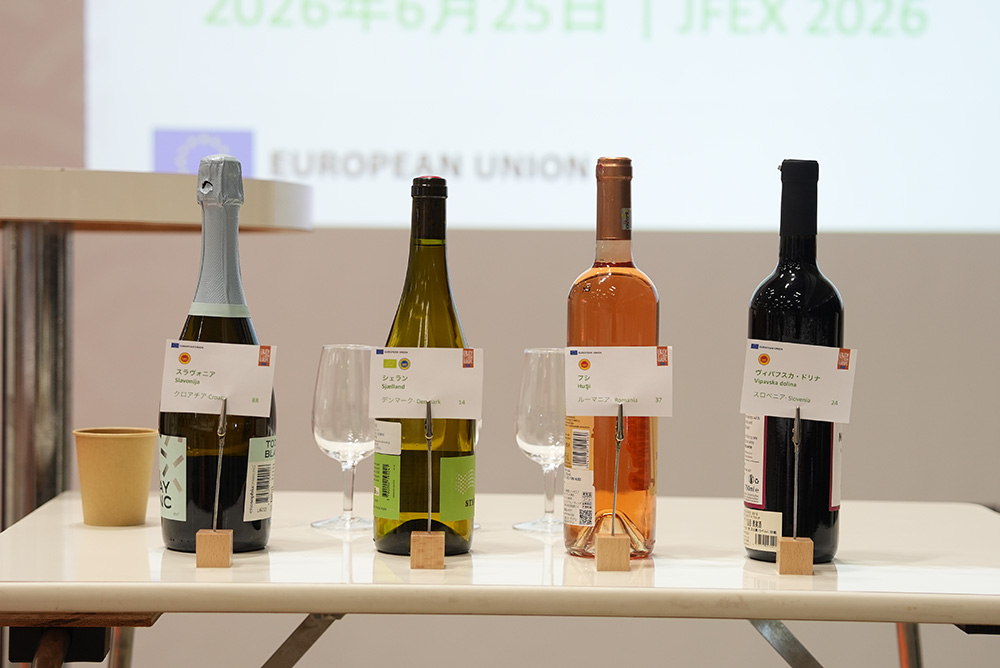
The European Union (EU) is promoting "The Perfect Match – Japan", a campaign designed to showcase exciting new pairings between Japanese cuisine and premium food and beverage products from across Europe. As part of this initiative, the EU Wine Seminar & Tasting Program was held on June 25 at JFEX 2026, held at Tokyo Big Sight. The first half of the seminar featured a presentation by a representative of the Delegation of the European Union to Japan, who introduced the unique strengths of EU wines. The session explored the long history of European winemaking, the EU's quality assurance schemes—Protected Designation of Origin (PDO) and Protected Geographical Indication (PGI)—the remarkable diversity of wine-producing regions and their distinctive terroirs, as well as the industry's growing commitment to sustainability.
This was followed by a guided tasting session led by a professional sommelier and wine educator. Participants sampled wines from across Europe while gaining practical insights into food pairing with Japanese cuisine, along with clear explanations of each wine's distinctive aromas, flavor profiles, and regional characteristics. Drawing on the key themes presented during the seminar, this article explores the rich cultural heritage that has shaped EU wines over centuries and highlights how their remarkable diversity offers new and exciting possibilities for Japan's evolving dining culture.
What Defines an EU Wine?
EU wine is far more than simply wine produced in Europe. It represents a centuries-old winemaking tradition rooted in history, shaped by local landscapes, safeguarded through rigorous quality assurance systems, and deeply intertwined with the rich and diverse food cultures of the continent.
Each EU Member State possesses its own unique combination of climate, soil, grape varieties, and winemaking techniques, making wine a true expression of place. From the world-renowned vineyards of France, Italy, Spain, and Germany to the emerging wine regions of Central, Eastern, and Northern Europe, every region offers its own distinctive identity. This remarkable diversity—where each wine reflects the character of its origin—is one of the defining strengths and greatest attractions of EU wines.
A key framework underpinning EU wines is the system of geographical indications, including Protected Designation of Origin (PDO) and Protected Geographical Indication (PGI). These schemes clearly define where the grapes are grown, how the wine is produced, and how closely it is connected to its region of origin, thereby assuring consumers of both quality and authenticity. In other words, a bottle of wine embodies not only flavor but also the history of its land, its cultural heritage, and the philosophy of the people who produce it. In recent years, EU wines have also continued to evolve in terms of sustainability. From organic viticulture and reduced pesticide use to low-intervention winemaking and environmentally conscious packaging, producers are embracing contemporary values while preserving long-established traditions. Today, the quality of wine is understood not only by taste but also by how it is made and how its legacy can be passed on to future generations.
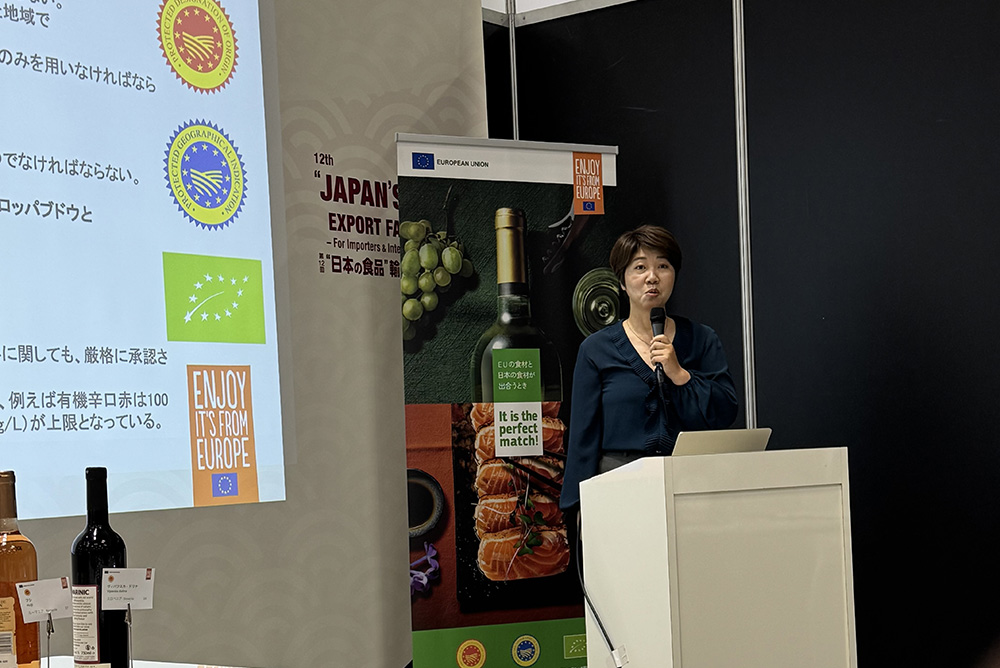
Megumi Kobayashi, Senior Trade Officer at the Delegation of the European Union to Japan
A World of Diversity and Terroir in Harmony with Japanese Cuisine
Japanese cuisine is built upon a profound respect for the natural character of its ingredients, emphasizing the delicate balance of dashi, saltiness, acidity, and umami. For this reason, wines defined solely by power and intensity are often less suitable than those distinguished by vibrant acidity, refined aromas, lingering finishes, and a pronounced sense of minerality. It is precisely this remarkable diversity that enables EU wines to complement the subtle elegance of Japanese cuisine so naturally.
For seafood dishes, crisp white wines and sparkling wines with refreshing acidity provide an ideal match, enhancing freshness without overwhelming delicate flavors. Tempura pairs beautifully with fine-bubbled sparkling wines, whose lively effervescence accentuates the light, crisp texture of the batter. Sweet and savory dishes such as yakitori and teriyaki are complemented by fruit-forward red wines and expressive rosés, while dishes seasoned with miso or soy sauce find added depth and complexity when paired with wines that offer maturity, savory character, and layered umami notes.
The relationship between Japanese cuisine and EU wines is far more than a meeting of East and West. Both are culinary traditions deeply rooted in regional identity, shaped by a profound respect for local ingredients, and enriched by stories that connect people, place, and culture. It is this shared philosophy that allows EU wines to integrate seamlessly into the Japanese dining experience, opening the door to new and rewarding flavor discoveries.
To discover EU wines is to gain insight into the landscapes, traditions, and craftsmanship of Europe. To enjoy them alongside Japanese cuisine is to rediscover those stories through the lens of Japan's own rich culinary heritage, creating a dialogue between two food cultures united by authenticity, diversity, and a shared appreciation for excellence.
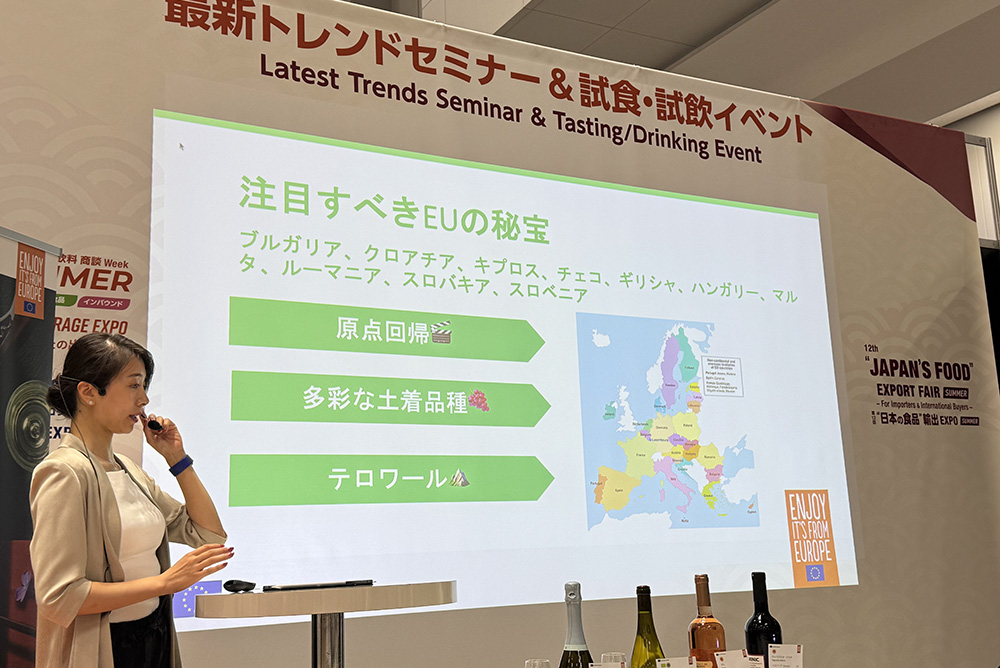
Natsuki Saito, Sommelier